



Osteochondrosis is a complex of dystrophic and degenerative disorders in the cartilaginous tissue of the vertebral discs.The disease can develop in the cervical, thoracic or lumbar spine.Osteochondrosis is accompanied by pain and disruption of the vascular and nervous systems.
This type of disease is the most common and occurs even in young people.Cervical osteochondrosis is the most dangerous, since it is accompanied by pinching of the nerve root extending from the spinal cord and impaired intracranial circulation as a result of the pressure of deformed intervertebral discs on blood vessels.
The vertebral artery, the largest blood vessel that supplies the brain, passes through the openings in the cervical vertebrae.Pressure on this artery can lead to dangerous complications, such as coronary artery disease and even stroke.
The perfect fit of the cervical vertebrae to each other leads to the fact that their slightest displacement causes compression of the nerves and blood vessels.This leads to a decrease in skin sensitivity, partial loss of hearing and vision and other nervous disorders.
Reasons
Osteochondrosis of the cervical spine is caused by internal (endogenous) causes and external (exogenous) causes.
Internal reasons include:
- Genetic (hereditary) factors;
- Disorders of intrauterine development of cartilage and bone tissue of the spine;
- Age-related factors influencing changes in cartilage tissue;
- Metabolic disorders.
The external reasons are more varied:
- Excessive pressure on the vertebrae due to improper loading;
- Various injuries and damage to the spine and back (bruises, falls, sprains, fractures);
- infectious diseases;
- Spinal muscle dystrophy;
- Poor posture in the form of slouching and S-shaped curvature of the spine;
- Working in an uncomfortable position;
- Drag heavy objects;
- flat feet;
- Overweight;
- Poisoning;
- Hypothermia;
- Uncomfortable pillows for sleeping;
- unfavorable environmental conditions;
- Lack of vitamins or microelements (calcium, phosphorus, manganese, zinc, vitamin D);
- Physical inactivity (lack of physical activity).
Cervical osteochondrosis is most likely to develop in people who lead a sedentary, sedentary lifestyle and engage in mental activities, but sometimes it also occurs in athletes, loaders or people whose work involves frequent bending and sudden movements.
Symptoms
The manifestations of cervical osteochondrosis are quite varied.These include:
- Pain in the neck, spreading to the back of the head, the eye and ear area, the shoulder girdle;
- Pain in the upper extremities, which worsens with the slightest effort;
- Muscle tension and limited neck mobility, especially in the morning;
- Pain when bending and turning the head;
- Feeling of numbness in the cervical spine after sleeping;
- Difficulty moving your arms, decreased range of motion;
- Burning, numbness and tingling in the upper extremities;
- Headaches that are mainly located in the back of the head, but can also extend to the temples and parietal part;
- tinnitus;
- Deterioration of vision and hearing (periodic and constant);
- Numbness of the tongue;
- Pain in the chest area or between the shoulder blades, which is not eliminated with nitroglycerin and depends on the position of the body;
- Excessive growth of connective tissue in the cervical region;
- Constant fatigue and fatigue;
- Drowsiness;
- Nausea;
- Diplopia (double vision);
- Cracking in the vertebrae.
Course of the disease and possible complications.
Even a slight load on the upper part can provoke the development of cervical osteochondrosis;This area of the spine is very vulnerable.Degenerative changes leading to the formation of osteophytes (growths in bone tissue) contribute to irritation and tension of nearby muscles, which in response to impact put even more pressure on cartilage and joints.This leads to the progression of the disease: compression of arteries and nerves.
If the disease is left untreated, bulges and herniations develop in the intervertebral discs, causing a significant decrease in spinal mobility and may require surgical intervention.
With severe degenerative changes in the cartilage tissue and lack of treatment, the so-called "radicular syndrome" can develop - damage to the cervical nerves.This leads to an intensification and progression of all the above symptoms and can also provoke speech, breathing and even such a rare phenomenon as constant hiccups.
The inflamed root can gradually occupy the entire area of the spinal canal, which causes an increase in pain syndromes and serious disturbances in the nervous regulation of the extremities and facial muscles.Impaired cerebral circulation can cause a weakening of intellectual abilities, memory, attention and lead to a stroke.
Osteochondrosis occurs with periods of exacerbations, when all symptoms appear especially acutely, and periods of remission.The duration of remission depends on the patient's lifestyle and the preventive measures taken.
Diagnosis
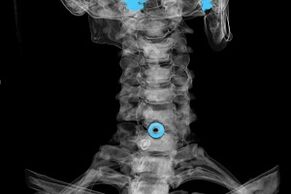
The diagnosis is established based on the characteristic symptoms, in addition to using:
- X-ray. The method is ineffective, especially in the later stages of the development of osteochondrosis.
- MRI (magnetic resonance imaging) of the cervical spine.A method that allows you to see bone structures, intervertebral disc herniations, their size and direction of development.
- Computed tomography.A less effective solution than MRI, since it is difficult to determine the presence and size of hernias.
- Doppler ultrasound (to identify pathologies of the cervical vessels).This method is used in cases where an alteration of blood flow in the arteries is suspected.Through a scan, the speed of blood flow and whether there are obstacles to it can be determined.
Treatment
It is more advisable to treat osteochondrosis in the initial stages of the pathology;However, in practice, doctors are consulted when the disease progresses to more dangerous stages.Self-medication for osteochondrosis is unacceptable and can lead to a deterioration in the general condition.
The therapeutic effect in the treatment of cervical osteochondrosis produces positive results with an integrated approach - a combination of medicinal methods and physiotherapy.
Pharmacological treatment
Medications effectively relieve (eliminate) pain symptoms, but do not affect the cause of the pathology, so it is not advisable to treat them with medications alone.
Medicines from the NSAID group relieve pain and inflammation well;The treating doctor prescribes the most appropriate remedy.
Medications to improve cerebral circulation and drugs that affect the relaxation of the neck muscles are also used.Vitamins in therapeutic doses (especially group B and nicotinic acid) and microelements (preparations of calcium, phosphorus and magnesium) help.
Treatment with chondroprotectors (dietary supplements) is practiced, which restore intervertebral tissues, but some doctors consider these drugs to be ineffective or even useless for the treatment of osteochondrosis.
Ointments and gels for external use have some therapeutic effect.
Physiotherapeutic and alternative treatment.
In specialized clinics dealing with orthopedics and the treatment of diseases of the musculoskeletal system, preference is given to physiotherapeutic methods instead of medications.On the basis of a detailed study of the medical history (anamnesis) and expanded diagnosis, doctors draw up special individual therapy programs, including:

- Electrophoresis (administration of medicinal substances through the skin using electrodes);
- Magnetotherapy (exposure to magnetic fields);
- Amplipulse Therapy (treatment with modulated currents);
- Reflexology;
- orthopedic gymnastics;
- Classes on special simulators;
- Massage;
- Manual influence methods;
- Ultrasound therapy;
- Laser therapy.
Treatment of osteochondrosis with non-traditional methods is popular: acupuncture, hirudotherapy (treatment with leeches) and osteopathy.
In advanced cases and in the presence of complications, doctors resort to surgery.
Prevention
Since the most common cause of cervical osteochondrosis is lack of movement and incorrect position of the body, the best preventive measure would be therapeutic exercises, which can be performed at the workplace, sitting or standing.
To prevent the disease, it is also necessary to visit an orthopedist from a very early age and carry out timely correction of postural disorders.
Prevents osteochondrosis and adequate nutrition, which provides the body with essential microelements.At the same time, overeating should not be allowed, since excess weight is one of the reasons for excessive load on the spinal discs.
When transporting heavy objects, be careful and distribute the load correctly.
The sleeping place, mattress and pillow play an important role: they should be comfortable and not create tension on the muscles of the back and neck.
And most importantly, avoid stress, nervous tension and negative emotions.
Forecast
With timely and qualified treatment, the prognosis is favorable, but much depends on the stage of the disease, the severity of the manifestations, the age of the patient and his compliance with medical recommendations regarding lifestyle, proper nutrition and elimination of bad habits.